
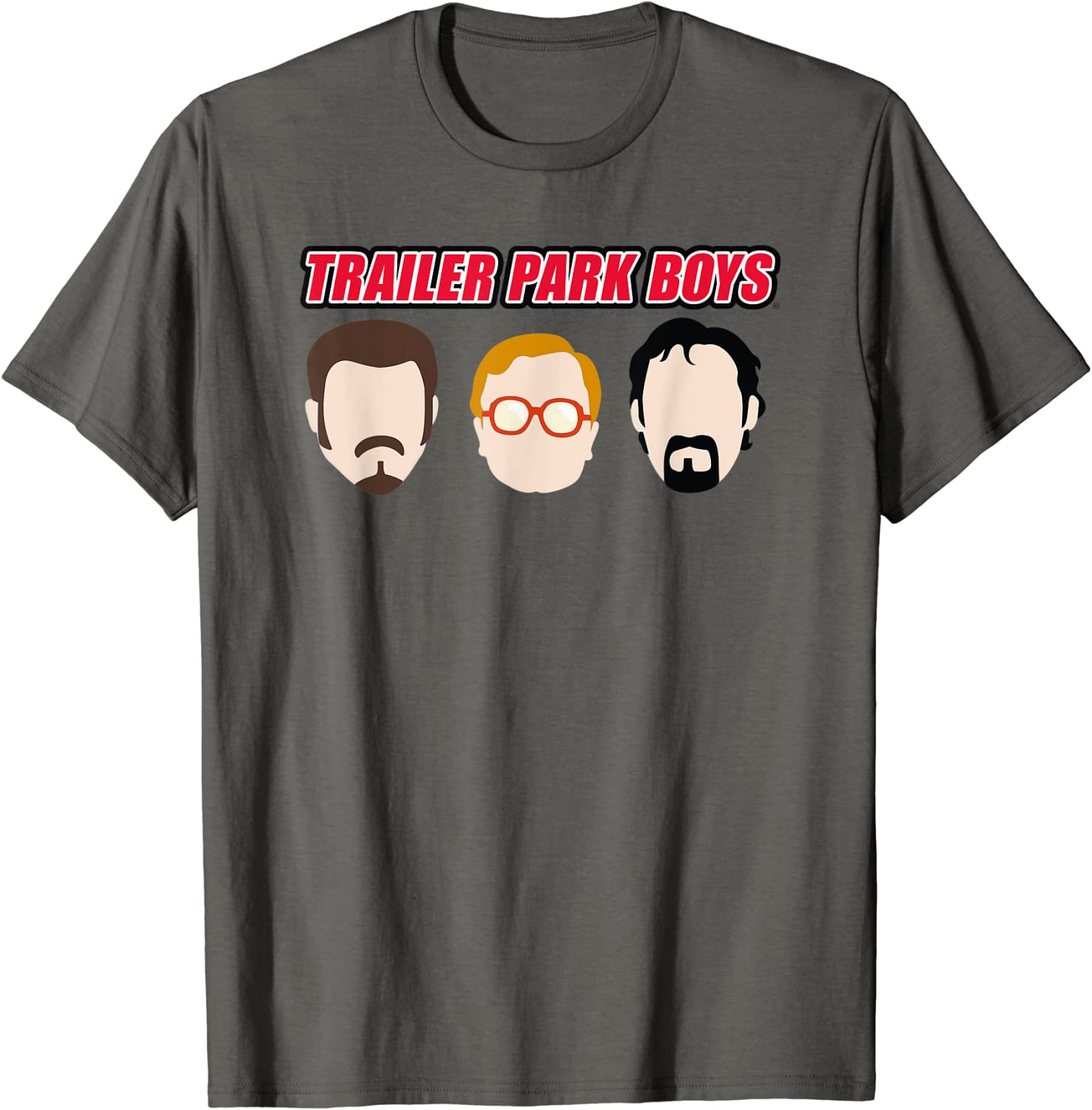
If you were to ask someone who has never seen Trailer Park Boys what kind of people watch the show, they might picture a very stereotype situation: fans of cursing, fans of Canadian TV, or folks who take pleasure in watching characters make bad life decisions.
And while there is some truth to that picture, it fails to provide anything like the full story about why the show should be enjoying such a wide, weird, and quietly dedicated fan base.
Many of the Trailer Park Boys devotees wouldn’t describe themselves as “comedy people” at all. They’re not the type of viewers who would stand in line to watch the specials or binge sketch shows.
They’re just regular people who see something in the show that feels roughly comforting, vaguely relatable, and oddly real amidst its absurdity.
So what is it about Trailer Park Boys that inspires non-raunchy-comedy fans to become die-hard supporters?
It’s not just about the jokes.
On the surface, the show is a one‑note comedy founded on swearing, bad decisions, and small‑time crime.
But if you give it a chance beyond the first few episodes, you realize that the comedy is only one level. Beneath the punch lines, there’s a surprising undercurrent of character work and emotional honesty.
The jokes aren’t the only thing that keeps people coming back. They’re a gateway. Once the tone gets crude enough, the viewer catches up with their characters’ beat and we start to notice how they respond to one another — each displays a ridiculous lack of awareness in them — and then backpedal, and, despite everything, turn up for each other.
That’s the aspect that’s keeping people tuned in long after the initial shock value subsides.
It doesn’t sugarcoat anything.

And most TV shows, even those of the half-hour variety, try to tie things up in a way that at least feels satisfying. Someone learns a lesson, the problem is solved, and that’s it.
Trailer Park Boys doesn’t quite do that. Problems snowball, misunderstandings linger, and many problems are not neatly solved by the end of an episode.
For many viewers, that’s strangely soothing. It seems a more honest reflection of how life really works.’ Sometimes you don’t get a nice, tidy ending. You don’t always feel like you’re being taught a lesson. You keep going, making mistakes, and sometimes stumbling into something that seems like a win. The show runs with that reality rather than fancying it up.
At its most ludicrous, though, Trailer Park Boys never seems like pure satire. Rick, Julian, Bubbles, and the rest of the Sunnyvale crew seem like people you might really know — or at least meet — even if you’ve never seen the inside of a trailer park.
They’re stubborn, complicated, sometimes selfish, and intensely weird, but they are also capable of constancy and strange forms of kindness and small acts of love that go unrecognized.
That balance is what makes the show work for non-comedy snobs. You don’t need to adore stand‑up or sketch humor to love the way relationships grow between characters who obviously care about each other, even if they’re awful at showing it. Even when the situations are absurd, the emotional beats ring true.
It’s a reassurance for the messiness in us.
Gentle, soothing stories don’t comfort everyone. Others are more comfortable with shows that acknowledge the messiness of life rather than pretend it’s all under control.
Trailer Park Boys is a permission slip for anyone who lives as they’ve always slightly missed the boat, has the laundry work of 12 people pending, and struggles with bad decision-making.
The show doesn’t require you to be perfect, or productive, or polished. It lets you know you can be a little dysfunctional and still be part of a strange little community. That’s a rare kind of comfort, and it’s part of what keeps people tuning in who might not ordinarily watch a show like this.
The humor feels strangely human.
Many comedy shows aspire to be clever, witty, or stylized. Trailer Park Boys can give the impression of not trying at all. The jokes are direct, the setups straightforward, and the punch lines often just the inevitable consequence of someone doing something dumb, which can be refreshing for those weary of over‑polished repartee and perfectly timed zingers.
More crucially, the show’s humor isn’t divorced from its characters’ feelings. A joke can hit while a person is actually upset, angry, or confused. That mixture of chaos and real feeling gives the comedy a sense of humanity and relatability that sets it apart from much else on television.
It commemorates loyalty in odd manners.
Loyalty is one of the most quietly powerful themes in the show.
Ricky, Julian, and Bubbles keep coming back to each other, even when maybe they should walk away. They make transgressive decisions, they wound one another, and sometimes — because they are both extremely intelligent in the same way — they irritate one another to such a degree that near‑explosion ensues. But they still find themselves in the same place, doing the same strange things, repeating the same cycles.
For viewers who have dealt with messy friendships, chaotic family dynamics, or complicated relationships, that repeat loyalty reads as validating. It’s not an image or an idealized version of friendship. It’s a messy, intractable, flawed one. And for many people, that’s more comforting than any impeccably mannered TV family.
It doesn’t pretend to be “good for you.”
So much of modern television is framed as “smart,” “important,“ or “critically acclaimed.“ It is frequently lauded as thought‑provoking, socially relevant, or emotionally nuanced.
Trailer Park Boys skips that entire conversation. It doesn’t purport to be good for you. It doesn’t make any pretense of being educational. It is simply there, loud and unashamed, and if you enjoy it, you enjoy it.
That’s part of its appeal. It doesn’t arrive with a side order of guilt or pressure. You don’t have to feel that you’re watching this because it’s “important.” You’re just watching it because it is real, messy, and somehow comforting. That’s a very rare form of freedom in a media landscape in which everything seems obligated to mean something.
It makes havoc feel familiar. It makes chaos predictable

If you’ve ever watched an episode and felt like you related to the energy, let alone your life is nothing like the show, I’m here with you. Trailer Park Boys has a knack for feeling like it’s referring to your life, even when it is in fact referring to a small community in a fictional trailer park.
The chaos, the half‑sane schemes, the strained relationships, the stubborn loyalty, and the silent hope that somehow or other the next thing will work out anyway — those are all things you see in real life whenever people aren’t lying about it. The show amplifies that kind of energy rather than ignores it.
It rewards long‑term viewers.
Many are designed to be consumed lightly, episode by episode, without much commitment to the characters. Trailer Park Boys is the other way around. The more you watch it, the more it feels like you’re entering a small, chaotic community. You begin to identify patterns, in-jokes, recurring points of conflict, and the ways certain characters always respond.
For viewers who don’t typically watch this type of comedy, that feeling of gradual understanding can be unexpectedly addictive. It feels like you’re learning the language of a place you didn’t even realize you wanted to go to.
It’s an embrace that doesn’t sugarcoat things.
Trailer Park Boys is, at its heart, a comfort show for people who were tired, stressed, or just done pretending everything was fine. It doesn’t comfort you with gentle optimism or tied-up plots. It doesn’t make your life any easier. It meets you where you are, chaos and all, and says, yeah, this is sort of what it’s like.
And for many others, that’s good enough. They don’t require a slick, perfect narrative. They want something real, weirdly relatable, and a little comforting too, even as it gets a little ridiculous.
If you’re one of those people who enjoys Trailer Park Boys even though you don’t consider yourself a “comedy person,“ then you’re probably just someone who’s found comfort in the chaos rather than fleeing from it. And that’s precisely what the show was designed to do.