

Every once in a while, a show shows up that doesn’t just break the rules—it completely ignores them. That’s exactly what happened with Trailer Park Boys. What started as a small, almost experimental idea eventually carved out a lane of its own, proving that polish isn’t everything—authenticity is.
How a Scrappy Idea Turned Into a Cultural Phenomenon
The roots of the series go back to early indie filmmaking. Before it became a recognizable brand, the concept lived in smaller projects, including One Last Shot, where the tone and character dynamics began taking shape. The creators weren’t chasing mainstream appeal. Instead, they leaned into raw storytelling, flawed characters, and a kind of humor that felt real rather than scripted.
That rough-around-the-edges energy became the show’s identity. It wasn’t just a stylistic choice—it was a necessity. Limited budgets forced creative decisions that ended up defining the entire vibe. Handheld cameras, natural lighting, and unfiltered dialogue made everything feel immediate and believable.
A big part of that realism came from the show’s inspiration. The mockumentary format didn’t appear out of nowhere—it borrowed heavily from real-world documentary styles. Shows like COPS influenced how scenes were shot and how characters interacted with the camera. The result? A series that blurred the line between fiction and reality so well that early viewers genuinely weren’t sure what they were watching.
And then there’s the cast. This wasn’t a group assembled through traditional auditions. Many of the key players already knew each other, having worked together in smaller creative circles. That chemistry translated directly onto the screen, giving the characters a natural rhythm that scripted shows often struggle to achieve.
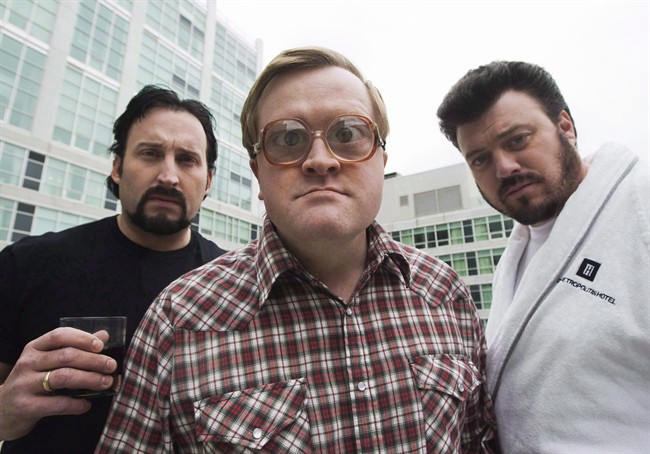
One standout example is the character Bubbles. What began as a simple gag—thick glasses worn for laughs—evolved into one of the most beloved personalities on the show. That kind of organic character development is rare, and it speaks to how much freedom the creators had to experiment and adapt.
Why It Looked “Cheap”—and Why That Worked
At first glance, Trailer Park Boys doesn’t look like a typical TV success story. The visuals are gritty. The camera work feels chaotic. The production doesn’t scream “high budget.” But that’s exactly the point.
The low-budget aesthetic wasn’t just a limitation—it became a storytelling tool. The shaky camera and imperfect framing made everything feel like it was happening in real time. Instead of distancing the audience, it pulled them in.
That approach also made the humor hit harder. The absurd situations felt grounded because they were presented in such a realistic way. There’s a big difference between watching a polished sitcom and feeling like you’re witnessing actual events unfold—and this show leaned heavily into the latter.
Getting the show on air, however, wasn’t easy. Pitching something this unconventional came with challenges. Networks weren’t exactly lining up to take a risk on a series that didn’t fit any standard format. It took persistence—and a bit of luck—to finally land a deal with Showcase.
Even then, success wasn’t guaranteed. Early audiences were confused. Some thought it was a real documentary. Others didn’t quite know how to categorize it. But that confusion quickly turned into curiosity—and eventually, a loyal fanbase.
From Local Oddity to Global Cult Favorite

Breaking into a wider market, especially the U.S., brought a whole new set of challenges. The humor was specific. The accents were strong. And the storytelling didn’t follow the usual American TV formula. For a while, it seemed like the show might remain a niche Canadian hit.
But something interesting happened—fans took over.
Word-of-mouth played a massive role in spreading the show’s popularity. People who “got it” couldn’t stop talking about it. Live tours and performances helped build a deeper connection with audiences, turning casual viewers into dedicated fans.
Then came the game-changer: streaming.
When Netflix picked up the series, it opened the floodgates. Suddenly, the show was accessible to a global audience. New viewers discovered it, old fans revisited it, and the fanbase expanded rapidly.
What made the show stick wasn’t just the humor—it was the consistency of its world. The characters didn’t suddenly become polished or mainstream-friendly. They stayed true to their roots, which kept the original charm intact even as the audience grew.
Of course, growth came with its own set of challenges. As the production scaled up, maintaining that raw, original feel became harder. Cast changes and evolving storylines also shifted the dynamic over time. That’s the trade-off with success—what starts as something small and personal can become something much bigger, sometimes losing a bit of its original edge along the way.
Still, the impact of Trailer Park Boys is undeniable. It proved that unconventional storytelling has a place in mainstream entertainment. It showed that audiences are willing to embrace something different—as long as it feels real.
And maybe that’s the biggest takeaway. The show didn’t succeed because it tried to fit in. It succeeded because it didn’t.